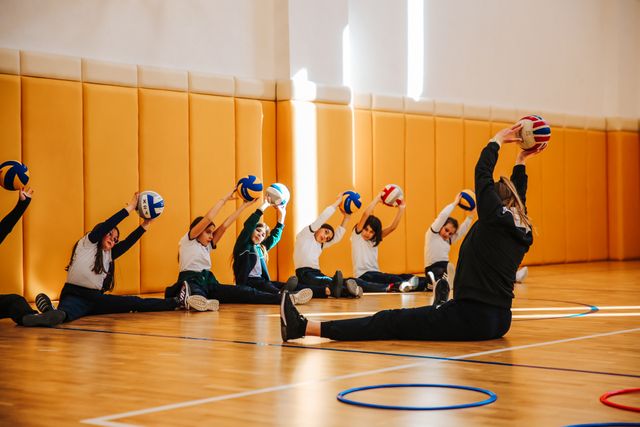
CHICAGO, October 6, 2026 – Marcus Thorne, an elementary school physical education teacher at Oakridge Elementary School in Arlington, observed the struggle of forty fourth-grade children trying to do jumping rope routines on an overcrowded gymnasium floor at 7:42 a.m. Some children were stumbling on their shoelaces while some others were giggling and attempting to do synchronized jumps. “Children shouldn’t be confined inside classrooms for six hours each day,” Thorne remarked, rubbing his whistle against his sleeve. “They have to move—to exercise not only their body, but most importantly, their mind.”
This practical fact gained national attention when federal education officials gave their official support to the new movement of well-being by announcing a Get Active partnership between them and the health officials in the country.
“We know that active kids learn better,” officials emphasized during the rollout, pointing out that daily movement sharpens mental focus while building resilience alongside better grades.
The program brings fitness events, interactive activities, and updated physical education recommendations right to your doorstep. The idea is to turn around years of declining activity rates in young people – a silent epidemic compounded by hours of smartphone screen time.
And this matters because classroom test scores and mental well-being have taken hit after hit in recent years.
The new findings emphasize how important this is to academics. For instance, in a paper conducted in 2025 by a professor from the University of North Carolina at Greensboro, it was found out that just nine minutes of physical activity can help improve the student’s academic and mental capacity for concentration in the classroom.
Still, getting every school district to buy in won’t happen overnight.
Some underfunded urban districts claim that their crowded curriculum leaves very little flexibility for additional physical education classes or recesses. On the other hand, rural administrators argue that the transportation of the gym equipment from town to the isolated campus can be another logistical headache. However, federal administrators say that the program will employ only easy and inexpensive movement techniques and not costly gym upgrades. Just imagine stretch exercises in class, walking groups, and games such as tag or dodgeball at playgrounds.
Details outlining updated fitness benchmarks are accessible through the official federal portal at GetActive.gov, where families and educators can download age-appropriate standards.
How fast the local school boards will embrace such voluntary measures is unknown, but parents sure hope that something changes. Standing outside a school drop-off point on the outskirts of suburban Maryland, the two children’s mother, Sarah Jenkins, expressed herself clearly. “Half the afternoon my children spend playing on the tablets,” Jenkins said, standing near her minivan. “As long as it gets them moving for at least fifteen minutes more every day, that’s okay with me.”
It is not clear how far those fifteen minutes will help change the youth health trends across the nation, but in the gymnasium of Thorne School, the whistle announcing the beginning of a relay game left no time for idling.