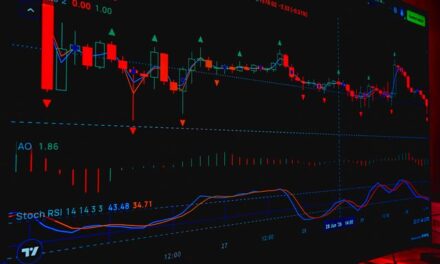

CHICAGO, Illinois, November 13, 2026 — Wall Street saw very large swings in prices of stocks due to big changes in what institutional investors thought about how much risk there was in the artificial intelligence industry. During most of the week, the major stock market indices were moving around a lot because of large drops in prices of some of the top-performing semiconductor and cloud computing companies.
Many portfolio managers became increasingly concerned with the length of time it would take to achieve a return on investment for large-scale corporate AI capital spending. Analyst reports indicated that company valuations had reached such extreme heights that there was very little room for operational error.
Institutional Trading and Retail Sensitivity
Institutional block trades caused the execution of many stop-loss orders in a series of events for major technology ETFs. Market makers reported a large increase in trading activity and wider spreads (bid-ask) because there was so much uncertainty on the trading desk.
Retail investors were very concerned when there were large drops in the stock prices of many of the most popular artificial intelligence stocks. This sudden volatility demonstrated just how sensitive retail investor psychology is to the stability of the technology-driven bull market.
Derivatives and Technical Indicators
Equity derivative trading desks were reporting a high number of trades of protective puts as many investors began looking for ways to protect themselves against potential declines in stock prices. Technical analysts looked at moving average indicators and support levels, indicating that the recent overbought technical conditions may make the area ripe for profit-taking.
The continuous roll-up reporting by the financial TV networks on the recent selloff in the technology sector included interviews with leading hedge fund managers and macroeconomists. While there were significant daily price fluctuations, long-term institutional investors took advantage of the panic selling and bought selected stock in the top technology companies. These extremely volatile trading days provided a clear reminder that technology adoption is a cyclical process, and that market valuations are also subject to cycles.
Reassessing Return on Investment Timelines
Wall Street’s reaction to the market was due to growing doubt among enterprise customers about how quickly companies can turn their artificial intelligence investments into money-making ventures. Enterprise customers were wondering if the cost of the subscription for the software and the cost of upgrading the hardware would produce enough productivity to justify those costs.
As stated in many equity research reports on the performance of the largest technology companies, there are increasing differences between the amount of money spent on capital expenditures (capex) and actual revenues generated by the company. In response to this trend, Wall Street analysts have recommended that investors use a more structured and fundamentally based method of evaluating companies that specialize in artificial intelligence (AI).
In contrast to the rapid and severe stock market declines experienced by companies who could not show a clear path toward long-term financial success, companies that had demonstrated disciplined use of capital and validated enterprise demand were able to maintain much of their value.
Venture Capitalists became more selective when providing early-stage AI startups with Series A and B financing. It was clear that the days of indiscriminate, risk-taking funding for all things AI-related had ended.
CIOs at Fortune 500 companies have conducted comprehensive internal audits to assess the actual value provided to their organization’s bottom line through the use of generative software. Board members require an audit report that details how much money will be spent on cloud computing expansion prior to giving approval for increased funding.
Financial analysts have said that although there has been an increase in technological innovation, the ability of companies to commercially translate that innovation into immediate labor cost savings or increased revenues via automation is what determines how investors will value their stocks. Companies who can demonstrate these types of benefits from their technology will receive favorable investor treatment. At present, the market is quickly making distinctions between companies that are providing the fundamental technology to enable others to benefit from it (foundational) and those that are simply using the technology as a wrapper around an existing product/service (superficial).
Broader Market Sector Rotation
Capital shifted from overvalued AI stocks to more stable sectors (defense), resulting in significant institutional capital entering these areas. Portfolio managers invested in utility stocks, consumer staple stocks and healthcare stocks to avoid the instability of the tech sector.
Fixed-income bonds also did well because investors were able to get high returns on their investments by buying bonds from both the U.S. government (Treasuries) and companies (corporate). Some financial experts stated that as economies grow older, they often experience large shifts in which industries are doing well, and this is considered normal behavior for those kinds of cycles.
Portfolio diversification techniques experienced a resurgence of interest from financial advisors who were concerned with reducing the amount of risk in their clients’ portfolios rather than seeking to obtain large returns through high-risk speculative investments. Despite the overall markets exhibiting signs of volatility, the banking industry stocks continued to show strength due to strong net interest income results.
The way that the stock market reacted each day to the economic reports (macroeconomic data of inflation and employment) was still dictating where the stocks would go. The Wall Street professionals were telling people that as long as they are disciplined in how they allocate their assets, this is their best protection from being caught off guard when the stock market corrects itself.
Wealth management firms adjusted their clients’ investment portfolios to reflect the intended mix of assets based on percentage of target allocations, reducing holdings in technology that were too large to purchase other investments that could potentially provide protection during times of volatility. Demand for dividend-paying equity investments was restored by income-oriented mutual funds looking for predictable sources of cash flow returns.
Institutional investors shifted capital to other sources of potential earnings through a process called sector rotation. Some examples of these areas include real estate investment trusts (REITs) and industrial manufacturers. The orderly transfer of capital away from certain sectors of the economy helped prevent an economic catastrophe that would have impacted large portions of the stock market.
Long-Term Outlook for Artificial Intelligence Finance
Although short-term market volatility and the rigorous assessment of risk may be taking place, long-term institutional confidence in AI has remained exceptionally high. Analysts have stated that the recent decline in the stock market was a necessary removal of excessive speculation, not a complete failure of the financial system.
Venture Capitalists and Private Equity Firms are still spending billions on the basic building blocks of our technology infrastructure and new types of software. Foundry companies who make computer chips and Cloud Computing Providers both have very large backlogs of orders from businesses that will last for years to come because there is a huge need for these services.
Corporate governance regulations and transparency within financial reporting determine which businesses are able to effectively manage through the changes occurring in the current market conditions. It is suggested by financial professionals that investors continue to maintain a well-balanced, diversified investment portfolio that includes investments in leading technology companies as well as in defensive industries.
The current assessment of values on Wall Street ultimately reinforces the long-term basis for the artificial intelligence (AI) economy. Effective risk management, coupled with efficient operation, will differentiate those companies that have sustained growth from those that are speculative and may fail.
The next several institutional research conferences that are being held over the next few months will primarily feature real-world enterprise deployment case studies as well as quantitative productivity measurements. Corporate earnings reports will be subject to an incredible amount of examination based upon how effectively they used their capital expenditures and how long it took to amortize those investments.
With the maturing of the markets, artificial intelligence (AI) will evolve from a speculative story told by those on Wall Street, to a utilities based operational standard for organizations around the world. In order to be prudent investors, we should continue to concentrate on executing our business plans despite changes in the overall market sentiment.