
CHICAGO, September 22, 2026 – The Federal Reserve increased its benchmark interest rate by a quarter of a percentage point to deliver the first interest rate hike since 2023 after the policymakers put pressure on an economy facing a lingering issue of inflation.
The Federal Open Market Committee voted by 12-0 to raise the federal funds target range to 3.75%-4%. Despite being predicted well in advance, the message carried within this small interest rate hike indicated clearly that the policymakers were much more concerned about inflation than letting anyone down.
“Inflation remains elevated,” the FOMC noted in its formal statement, underscoring that the move was intended to guide price increases back toward the central bank’s long-term 2% goal.
Fed Chair Kevin Warsh put it more bluntly during his press conference, stating that inflation has simply been “too high for too long.”
And this matters because borrowing costs are rising across the board—again.
Interest rates for credit cards, adjustable loans, and equity lines generally react very quickly to changes in the federal funds interest rate. Although mortgage rates do not immediately track changes to the federal funds target rate, they are still strongly linked to bond market forecasts. The average 30-year fixed mortgage interest rate is 7.19%, as climbing yields on U.S. Treasury Bonds continue to put pressure on the housing sector.
For consumers and businesses, even a quarter-point increase adds up to an already expensive economic situation.
According to the most recent predictions from the Fed, this interest rate increase might not be the last. Most policymakers indicated that another increase in interest rates might come even before the end of 2026, while four predicted that there may be two more increases needed. The Federal Open Market Committee increased its inflation forecast, which shows headline PCE inflation of 3.7% and core PCE of 3.4%.
On the other hand, the policymakers cut down their forecast for the unemployment rate to 4.1%, which indicates their strong belief in the inherent strength of the labor market. In accordance with the dual mandate by Congress, the Fed has to ensure a fine balance between price stability and maximum employment.
“We need to stay in our lane,” Warsh told reporters, declining to engage with political critics pressing for lower interest rates.
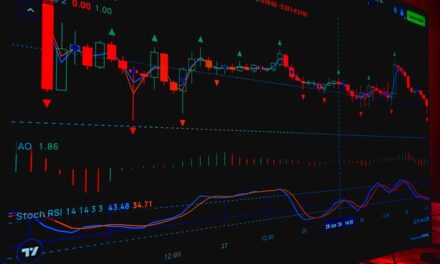
There was a swift reaction from Wall Street. Stocks fell during the press conference because of the possibility of prolonged tightening by the Fed, whereas yields on long-term Treasuries stayed high. The Fed believes that the risks of maintaining a firm stance are much smaller than those of entrenched inflation.