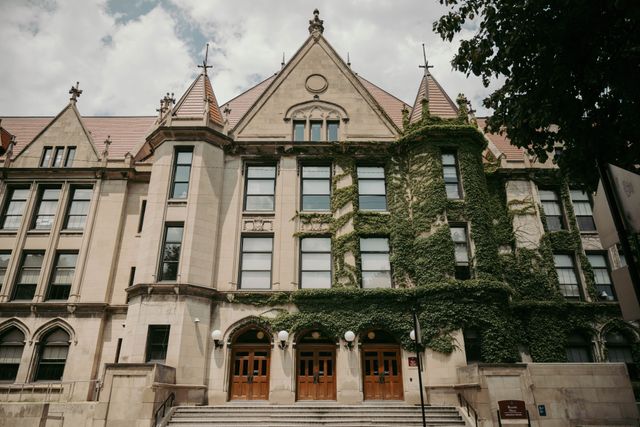
CHICAGO, September 11, 2026 – The University of Chicago has once again claimed the top spot in a national ranking of campus free-speech climates, though the result comes with a major asterisk: securing first place didn’t translate into an excellent grade.
The university scored 81.42 overall and earned a grade of B- for its speech climate in the 2027 College Free Speech Rankings announced on Sept. 9 by the Foundation for Individual Rights and Expression, or FIRE. Despite the modest grade, UChicago finished in the top spot for the third time in seven years.
This dual reality—leading the nation while earning a barely above-average mark—reflects the tension of the broader report. While UChicago scored highest among all institutions, the country’s overall campus climate remains in poor shape, averaging a score of just 61.36—a D- on FIRE’s scale.
Roughly 63,000 undergraduate students from 262 four-year colleges and universities participated in the survey, which ran via the College Pulse platform between January 2 and June 3, 2026. Rather than evaluating administrative policies alone, the study centered on how students actually experience speech day-to-day on campus.
FIRE’s overall score combines 12 distinct variables divided across three broad categories: student perceptions, written campus speech codes, and real-world institutional responses to speech controversies.
Survey questions probed key issues: whether students felt safe expressing controversial opinions, how often they self-censored, and whether they trusted administrators to back a speaker during an incident. Respondents also shared their political tolerance, comfort levels discussing sensitive topics, and views on disruptive tactics—like shouting down speakers, blocking venue doors, or using violence.
Others were used to measure the activities of universities. The measures included whether a university had adopted the historic Chicago Statement on Principles of Free Expression; whether institutional neutrality was preserved; or whether speech policies were stringent.
The formula is complex, and no single score can fully capture every debate inside a seminar room, student newspaper office, or crowded quad.
Indeed, the final score for UChicago narrowly edged that of the second-ranked institution, Claremont McKenna College, which scored 80.13. According to FIRE, both of these schools were credited with achieving the highest scores ever achieved by any of the ranked institutions.
Nonetheless, the B- rating highlights the continuing controversy on campus. Indeed, fostering an open forum for debates is a daunting task at universities today. In spite of the official assurances by university administrators, students are under intense pressure from their peers and even the threat of jeopardizing their future career opportunities.
FIRE noted that the proportion of students who felt comfortable using disruptive tactics—like shouting down guests, shutting down events, or resorting to violence—dropped slightly from last year. While that’s a welcome sign of progress, the national average’s dismal D- grade shows there’s still a long way to go.
Controversial topics such as the Israel-Palestinian conflict, Donald Trump, Charlie Kirk, and abortion laws were among the top topics found hard to discuss freely by students. This disparity reveals the difference between the theory and reality of freedom of debate, where despite having the liberty to debate sensitive matters on paper, students may opt to remain silent as a means of safety.
UChicago, in addition to being the leader in promoting open debate, receives a B in the ranking. The numbers make the university proud of all the efforts that it has been making for years.
Being at the top is not enough; being able to guarantee total freedom of discussion before counting points is what counts the most.