CHICAGO, September 25, 2026 – The red carpet really did roll out first, followed by the B-1 bombers, the 21-person honor guard, and a 100-foot red carpet that seemed more like Broadway than an airport. On Wednesday night, at Joint Base Andrews, President Donald Trump and First Lady Melania Trump did something unusual for a U.S. host: they welcomed Chinese President Xi Jinping and his wife, Peng Liyuan, to the bottom of Air China’s stairs.
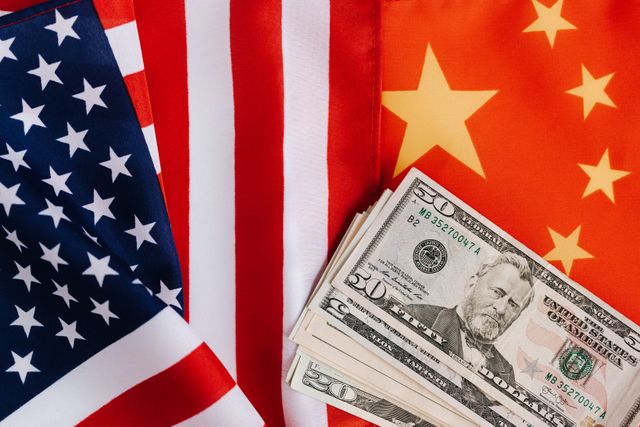
It was a ceremony with a message. Just hours before, Treasury Secretary Scott Bessent said that the U.S. and China have reached an agreement to prolong their temporary truce on trade—a deal referred to as the Busan agreement—until January 10, thus giving themselves approximately two months of breathing space in the world’s most important economic relationship. The extension, which was supposed to expire in mid-November, ensures that both parties keep tariffs low and any new limitations are put on hold until they find out if promises made regarding farm purchases and critical minerals are fulfilled.
“I don’t know whether a bigger deal can be done. I don’t know whether we will just roll the current deal,” Bessent said, adding the extra time could set up more talks at upcoming summits in China and Florida. Translation: nobody’s calling this a breakthrough. But after years of whiplash, stability counts.
Symbolism characterized the ceremony more than actual policy. Trump wore his coat and gloves even when the temperature stood at 63 degrees Fahrenheit, and he took off one of his gloves to shake Xi’s hand before patting him on the back and exchanging some unheard words between themselves. Two B-1 bombers performed a flyover ceremony above them as Trump made a wincing expression because of the noise while Xi remained poker-faced.
“It’s pretty notable that Xi Jinping is coming to Washington in the same week as the [UN] General Assembly, but does not feel bothered to come up to New York,” said Richard Gowan of the International Crisis Group, underscoring how the visit’s location telegraphs where real decision‑making power is perceived to sit.
The reaction from within the Beltway was predictably split between the two parties. For some Republicans, the luxurious welcome ceremony was too much to take. For example, Sen. Roger Wicker (R-Miss.), chairman of the Senate Armed Services Committee, stated that it was a mistake for Trump to invite Xi “given all of the issues that we have with President Xi and the Chinese Communist Party.” On the other hand, the Republican senator and the secretary of state, Marco Rubio, maintained that the two most powerful economies—and, most likely, the two strongest militaries—have to engage each other at the highest level.
For Beijing, the symbolism was important. The former Obama administration diplomat and now Asia Society Policy Institute expert Danny Russel called this extravagant welcome ceremony a “propaganda win,” which the Chinese capital can use in order to prove the elevated position of its leader both domestically and internationally. And, indeed, the long red carpet was not coincidental; it is reminiscent of the welcome ceremony that took place in Beijing earlier this year for the visit of Air Force One.
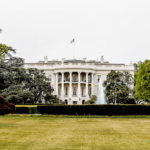
Substance, such as it was, came in cautious phrases. In a written statement upon arrival, Xi said China and the United States “should be partners, not rivals,” adding that “achieving the great rejuvenation of the Chinese nation and making America great again can go hand in hand.” He later gave a toast at a black-tie state dinner packed with technology executives—Nvidia CEO Jensen Huang, SpaceX CEO Elon Musk, and others—that Trump and Xi shared “a truly great relationship,” and that the two nations had “never gotten along better,” as demonstrators shouted pro-democracy slogans in Hong Kong outside onto the South Lawn.
The agenda is full and fractious: artificial intelligence controls, Taiwan, rare earth minerals supply chains, and, more broadly, the repercussions of the administration’s war on Iran, which has raised energy prices and lowered Trump’s approval rating before midterm elections in November. Xi called on the United States to support China’s opposition to “Taiwan independence” in talks between the two countries, reported Chinese state media, while also asking for “healthy competition” and continuing military-to-military exchanges to mitigate crises.
But here’s the strange thing: with such an impressive list of attendees, no one expected any real breakthroughs, and none happened. AI competition alone makes that unlikely, say analysts, along with continued export controls on the latest chips while China demands fair treatment of its firms in the United States.
However, on Friday, the meeting is to continue with a private tea at the White House, as well as a tour of the National Archives where both couples are to review papers highlighting the complex history of the relations between the two countries. At the moment, the most concrete result is the continuation of the truce for two months.