
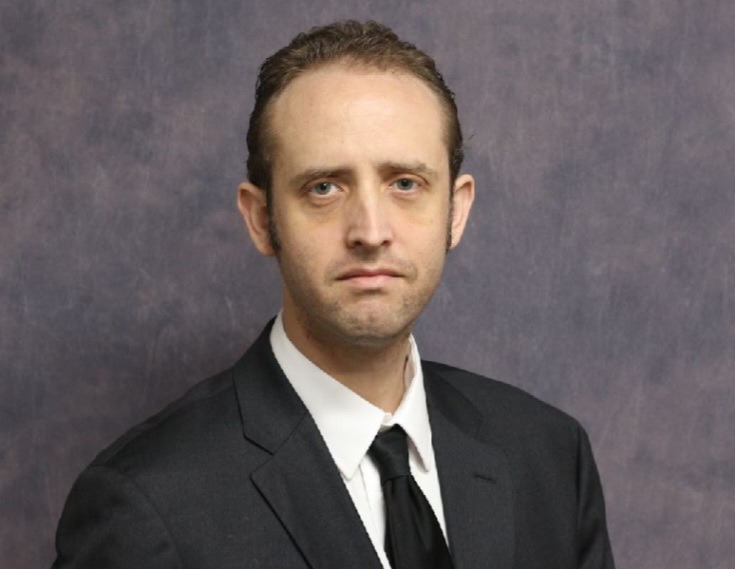
Author: Dr. Jonathan Kenigson
Chicago, Illinois, March 9, 2026 – Chicago’s schools confront a problem that has become impossible to ignore. Students arrive at college unprepared for quantitative work, large numbers of undergraduates must take remedial mathematics, and even strong students often describe mathematics as a series of arbitrary procedures rather than a coherent intellectual discipline. At the same time, artificial intelligence systems can now solve algebra problems, compute derivatives, write code, and even produce plausible mathematical explanations in seconds. If mathematics education remains centered on mechanical procedures alone, students will increasingly see little reason to learn what machines already do better. Yet if schools abandon discipline and mastery entirely in favor of loosely guided “student-centered” exploration, the results are equally troubling: students often fail to acquire the fundamental skills on which real mathematical reasoning depends.
Steps toward a resolution of this tension may hail from a surprising clime. During the twentieth century the Soviet Union developed one of the most effective systems of mathematical education in history. It produced generations of mathematicians and scientists who reshaped modern mathematics and theoretical physics. Andrey Kolmogorov, Israel Gelfand, Vladimir Arnold, and Sergei Novikov were brilliant researchers who also participated directly in shaping how mathematics was taught to children and university students. Their educational philosophy combined two principles that today are often mistakenly treated as opposites: rigorous mastery of fundamentals and deep intellectual curiosity. Chicago’s schools and universities could adopt several of the central features of this tradition, improving learning outcomes while simultaneously reducing instructional overhead.
The Soviet mathematical culture began from a simple assumption: students are capable of far more intellectual sophistication than conventional curricula expect, provided they possess strong foundational skills. In early grades, arithmetic fluency was developed through systematic and sometimes demanding drills. Students practiced until basic operations became automatic. Multiplication tables were memorized thoroughly. Algebraic manipulations were rehearsed until they could be performed confidently and without hesitation. These exercises were understood as preparation for mathematical freedom. Just as a musician practices scales or an athlete trains basic movements, a student who has mastered the mechanics of arithmetic and algebra can devote attention to deeper reasoning. Without that foundation, higher mathematics becomes frustrating and inscrutable.
Contemporary “student-centered” approaches attempt to minimize direct instruction and routine practice in early grades. Students are encouraged to discover algorithms themselves or explore open-ended activities before they have developed fluency in basic skills. While these methods are often well intentioned, the results are frequently disappointing. Students may develop informal intuitions about numbers yet struggle with precise calculation or symbolic reasoning. Teachers in secondary schools and colleges then face the difficult task of reteaching material that should have been mastered years earlier.
The Soviet tradition insisted on sequential mastery. Fundamentals came first, followed by increasingly sophisticated problem solving. Once students had command of arithmetic and algebraic techniques, they were introduced to problems that required ingenuity rather than routine calculation. Textbooks and problem collections emphasized puzzles, geometric arguments, and surprising numerical patterns that demanded careful thought. This emphasis on elegant problem solving produced students who understood mathematics as a coherent intellectual structure founded in aesthetics. A cleverly designed problem might reveal an invariant hidden within a game, a geometric symmetry concealed in a diagram, or a number-theoretic pattern emerging from simple observations. Students learned to recognize structure and search for explanations.
One of the most compelling embodiments of this pedagogical tradition came from Ukraine. Boris Yakovlevich Kordemsky, a mathematics teacher and popularizer associated with the mathematical culture of Kyiv and Moscow, wrote the celebrated problem collection The Moscow Puzzles. The book became internationally famous because it demonstrated how deep mathematical thinking could emerge from playful problems accessible to young students. Kordemsky’s puzzles often appeared deceptively simple: arranging matchsticks to form unexpected geometric figures, exploring numerical curiosities, or discovering patterns in sequences of numbers. Yet solving them required the very habits of mind that characterize genuine mathematical reasoning.
Soviet classrooms placed extraordinary emphasis on the authority and character of the instructor. He or she was a respected intellectual figure who was trained to a high standard equivalent to a doctor or lawyer. Students were expected to listen carefully, follow arguments precisely, and present their own reasoning clearly at the board. When a student solved a problem, the class discussed the solution collectively, often comparing multiple approaches. Students learned that mathematics demands precision, but they also learned that careful reasoning earns respect. They gradually appreciated how difficult it must have been for the teacher who trained in Moscow or Leningrad. The teacher who was loving and generous despite the brutal rigor of their training was prized by students as an eternal advocate and mentor.
Mathematical circles reinforced this culture of respect and curiosity. These informal gatherings brought students together to tackle challenging problems under the guidance of mathematicians. University mathematicians worked with secondary students outside of school. Indeed, the likes of Kolmogorov and Gelfand regularly interacted with young students in such settings entirely without fees. Chicago could implement similar structures with remarkable efficiency. The city already possesses an extraordinary concentration of mathematical talent in institutions like the University of Chicago, Northwestern University, and the Illinois Institute of Technology. Graduate students and faculty could collaborate with local schools to run mathematics circles and problem-solving workshops at minimal cost. Because these sessions rely primarily on discussion and reasoning rather than expensive technology, the financial requirements are modest.
This approach would also reduce the overhead associated with remedial mathematics in colleges. Across the United States, universities spend millions of dollars each year providing developmental mathematics courses for students who arrive unprepared for college-level work. These courses require additional instructors, administrative coordination, and extended enrollment periods that increase institutional costs. A system that ensures strong mastery of arithmetic and algebra in secondary school dramatically lowers the need for remediation. Students who arrive at college ready to engage directly with calculus, statistics, or discrete mathematics complete their degrees more efficiently. Universities spend fewer resources on non-credit courses, and students avoid the discouragement that often accompanies remedial placement.
The Soviet emphasis on rigorous practice also reduces dependence on expensive technological interventions that promise to “personalize” learning through software platforms. Many school systems invest heavily in digital tools designed to track student progress through large banks of automated exercises. While such systems can supplement instruction, they cannot replace a knowledgeable teacher who explains ideas clearly and demands careful reasoning. A chalkboard, a well-designed set of problems, and a teacher who commands respect remain among the most effective instruments of mathematical education. In an era of constrained educational budgets, this simplicity is both pedagogically sound and economically prudent.
Chicago has long prided itself on intellectual ambition and educational seriousness. Reintroducing elements of the Soviet mathematical tradition would not mean importing an entire historical system. It would mean recognizing that genuine mathematical competence requires both discipline and curiosity. Students must practice fundamental skills until they become second nature, and they must encounter problems that reveal the beauty and structure of mathematics itself. In a pedagogical landscape increasingly shaped by artificial intelligence, that capacity may be one of the most valuable forms of education Chicago can provide.