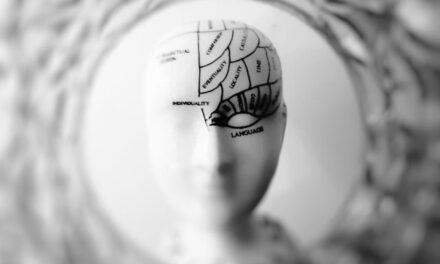

CHICAGO, October 8, 2026 – Picture flipping an ordinary light switch in the living brain and instantly seeing a particular memory come to life, or a fear buried deeply disappear. This would surely seem like a piece of science fiction. However, being able to manipulate things with such precision became an essential part of contemporary neuroscience research due to the introduction of one novel approach – optogenetics.
On Monday morning in Stockholm, the Nobel Assembly at the Karolinska Institute announced the laureates of the 2026 Nobel Prize in Physiology or Medicine “for the discovery and development of optogenetics, which enables spatial and temporal control of neuronal activity using light.” The trio will split the 12 million Swedish kronor ($1.2 million) prize equally.
And here is the wall that scientists were banging their heads against for years: there are tens of billions of neurons in human brain tissue all entangled into an impossible mesh. The conventional method of electrical stimulation was just too crude. The electrical shocks were firing off entire neighborhoods of cells – both good, bad, and completely innocent. It was nearly impossible to prove which particular circuit caused a certain behavior.
Then came single-celled green algae.
In the early 2000s, two biophysicists, Peter Hegemann and Georg Nagel, discovered light-sensitive molecules called channelrhodopsins from microscopic single-celled algae. These special molecular pores behave like miniature solar cells; expose them to blue light, and they will open up to allow charged ions to rush inside the cell.
It was then that Karl Deisseroth, a neuroscientist and psychiatrist at Stanford University, took the critical step forward. He figured out that the proteins from those microbes could be transferred genetically to mammalian brain cells. By transferring the algal genes to the targeted neurons, he made it possible for them to activate under laser light.
Thus, a way was created to activate and deactivate certain neural circuits with precise timing.
The breakthrough gave scientists surgical clarity where they’d previously been guessing in the dark. Per Svenningsson, Chairman of the Nobel Committee, underscored the magnitude of the discovery, noting that “optogenetics has fundamentally changed neuroscience by allowing us to manipulate brain function with extraordinary precision, revealing the neural basis of behavior and brain disorders.”
For the last 20 years, thousands of laboratories around the world have employed this set of molecular tools to study Parkinson’s disease, addiction, clinical depression, and anxiety disorders.
This tool has now come out of the research laboratory and is being applied clinically. Clinical trials on humans are already underway for optogenetic gene therapy treatments for retinitis pigmentosa, a genetic disorder that leads to loss of vision, by making the surviving retinal cells light-sensitive.