CHICAGO, September 25, 2026 – Families whose children have autism, Down syndrome or cerebral palsy may find themselves on a hunt for a dentist who “gets it.” Sensitivity. Anxiety. Physical challenges. All of which can make what should be an easy experience more difficult.
On Wednesday, the Department of Health and Human Services announced an effort to alter that equation. In a press release from HHS, the department made 28 awards for a total of $51 million in support of special needs children to 28 community health centers funded by HRSA.
“Children with neurodevelopmental disorders should not struggle to get the dental care they need,” HHS Secretary Robert F. Kennedy Jr. said in a statement released from the agency’s press room. “We are investing $51 million in HRSA-funded health centers to remove barriers to care, equip providers to better serve these children, and give families more options close to home.”
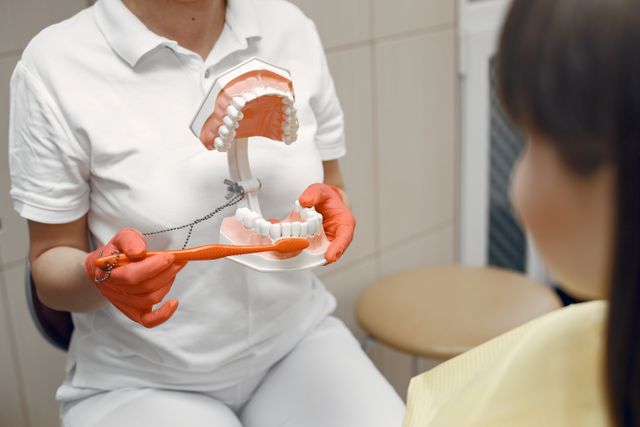
The funding runs through HRSA’s Quality Improvement Fund via a new line item: Improving Access to Dental Services for Children with Neurodevelopmental Disorders (QIF-DNDD). Each of the 28 grant recipients can receive up to $2 million to try out approaches backed by research and then spread knowledge about those solutions. Consider such strategies as allowing extra time per appointment, doing desensitization appointments, having care coordinators arrange transportation for patients, even setting up mobile units for those who need them. The idea is not simply to increase the number of treatment chairs but to provide better care.
“It should not be hard for a parent to find a dentist ready to take care of their child,” says HRSA Administrator Tom Engels. This, indeed, is the problem—children with such problems may not get regular checkups because dentists’ facilities are unprepared to serve their specific needs and, thus, such patients may get fewer preventive checkups.
Here’s the proposed framework: health centers will invest these resources in developing customized preventive services, workforce development (i.e., training staff that understands sensory triggers and alternative communication strategies), and replicable models. Health centers that receive funding become part of collaborative learning and evaluation projects, helping HRSA identify patient-centered and sustainable approaches for broader implementation. It is assumed that local innovations could lead to national changes.
The importance of the funding program lies in its timing: HRSA-funded health centers are already serving more than 32.7 million individuals through over 16,600 locations across the country (or 1 out of 8 children and 1 out of 5 rural dwellers). Thanks to their model of care without any limitations to paying capabilities of patients, they are able to integrate oral health into primary care and help families utilize care coordination, transportation, and educational services. In other words, the infrastructure is available; what remains to do is direct the flow of care.
No one expects this to resolve everything instantly. Not all kids will stop needing specialized treatment. Some areas may be left behind. Workforce shortages in pediatric dentistry cannot be solved through one grant cycle. But the approach is carefully considered: fund what works, measure it, and replicate it.
From the parent’s point of view, there is a clear vision – more choices near home, and providers who know how to treat their kids’ condition. For policymakers, it becomes a chance to find out whether the focused and evidence-based funding strategy will close the persisting gap in prevention.
A list of the awardees in FY 2026 and more information about the QIF-DNDD initiative are available at the HRSA website, along with tools for finding the nearest health center. If the projects prove successful, the next round of funding will not only be financial but also include the models for those families who have been told far too often to wait their turn.